Interiors that survive the monsoon.
Swollen shutters, peeling laminate, a musty wardrobe, a rusted hinge. Mumbai's humidity finds every weak point. Most of them can be designed out from the start.
For four months of the year, the air in Mumbai is close to saturated. Wood-based boards absorb that moisture, swell, and then shrink again when the season turns. The choices below are about controlling that cycle.
The right board in the right place
Not every cabinet needs the most expensive board, but the ones near water do. A simple rule:
| Where | Use | Avoid |
|---|---|---|
| Kitchen base units, around the sink | Boiling-water-proof (BWP) or marine plywood | MDF, particle board |
| Bathroom vanities | BWP or marine plywood, or a moisture-proof board | MDF, particle board |
| Wardrobes and beds | Moisture-resistant (MR) plywood | Unsealed boards against external walls |
| Shutters and panels | Plywood or good-quality board, edge-sealed | Raw edges |
Ask for the grade in writing on your quotation, item by item. It is one of the easiest places for costs to be cut without you noticing.
Seal every edge
Moisture enters a board through its edges. Every edge should be sealed with edge banding, including the ones you never see: the back of a shelf, the underside of a shutter, the hole cut for a pipe.
Laminate on one face only can also make a panel bow. Ask for a balancing laminate on the inside face of shutters and panels so both sides respond to humidity equally.
Keep furniture off damp walls
External walls and walls shared with a bathroom are the ones that get damp. Before any carpentry goes against them:
- Find and fix the source of any damp, whether a crack outside, a leaking pipe or failed waterproofing.
- Let the wall dry and treat it with an anti-fungal coat.
- Leave a small air gap behind wardrobes on these walls, and add ventilation slots at the top and bottom.
Bathrooms
Bathrooms take the most water, so they deserve the most care.
- Waterproofing, tested. A fresh layer under the floor and up the walls, flood-tested before tiling.
- Epoxy grout between tiles in wet areas. It resists water and stains, and does not grow black mould like cement grout.
- A proper slope to the drain, so water never stands.
- An exhaust fan that vents outside, run for a while after every shower.
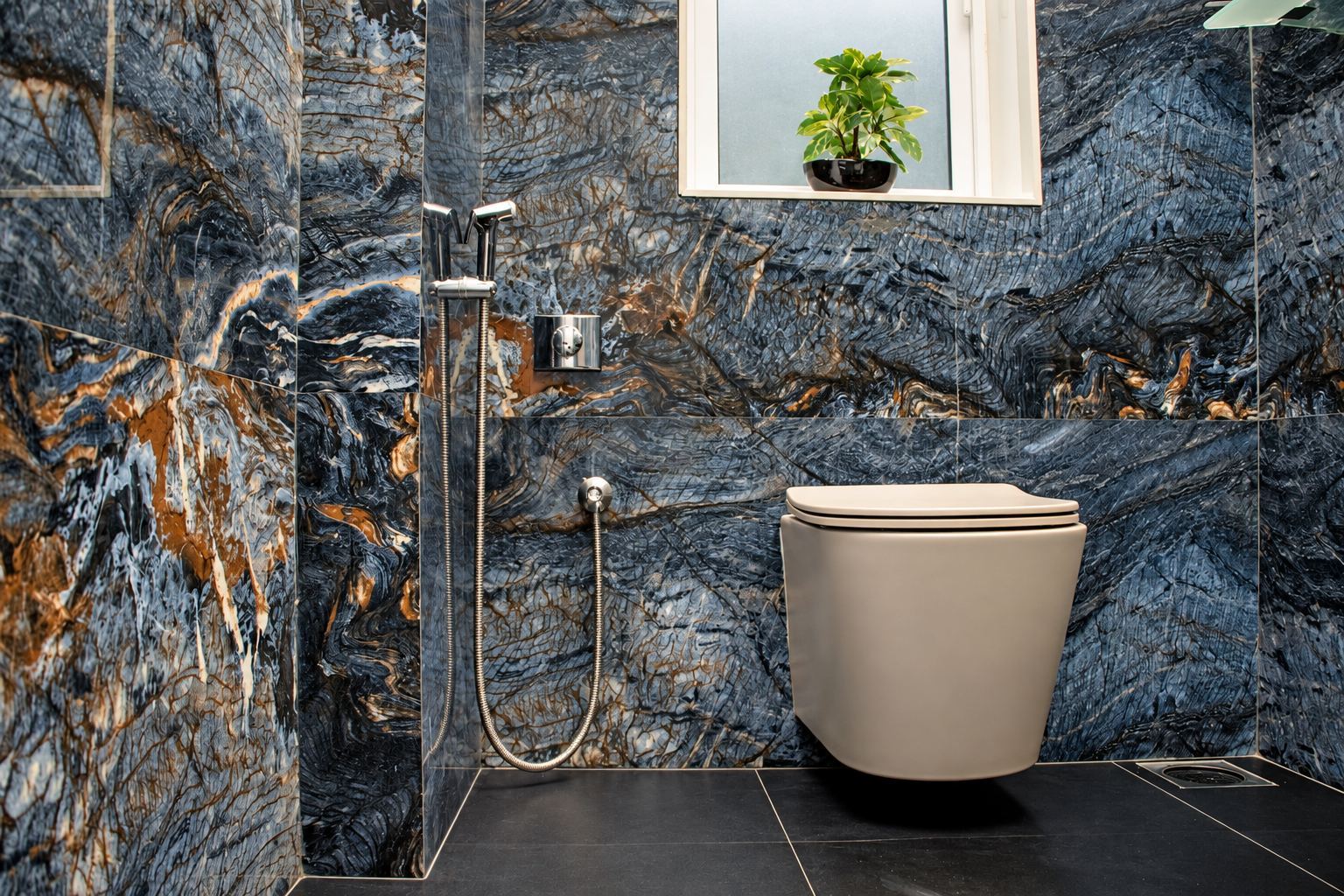
- Wall-hung fittings and vanities, so the floor can be mopped and dried completely.
Hardware that does not rust
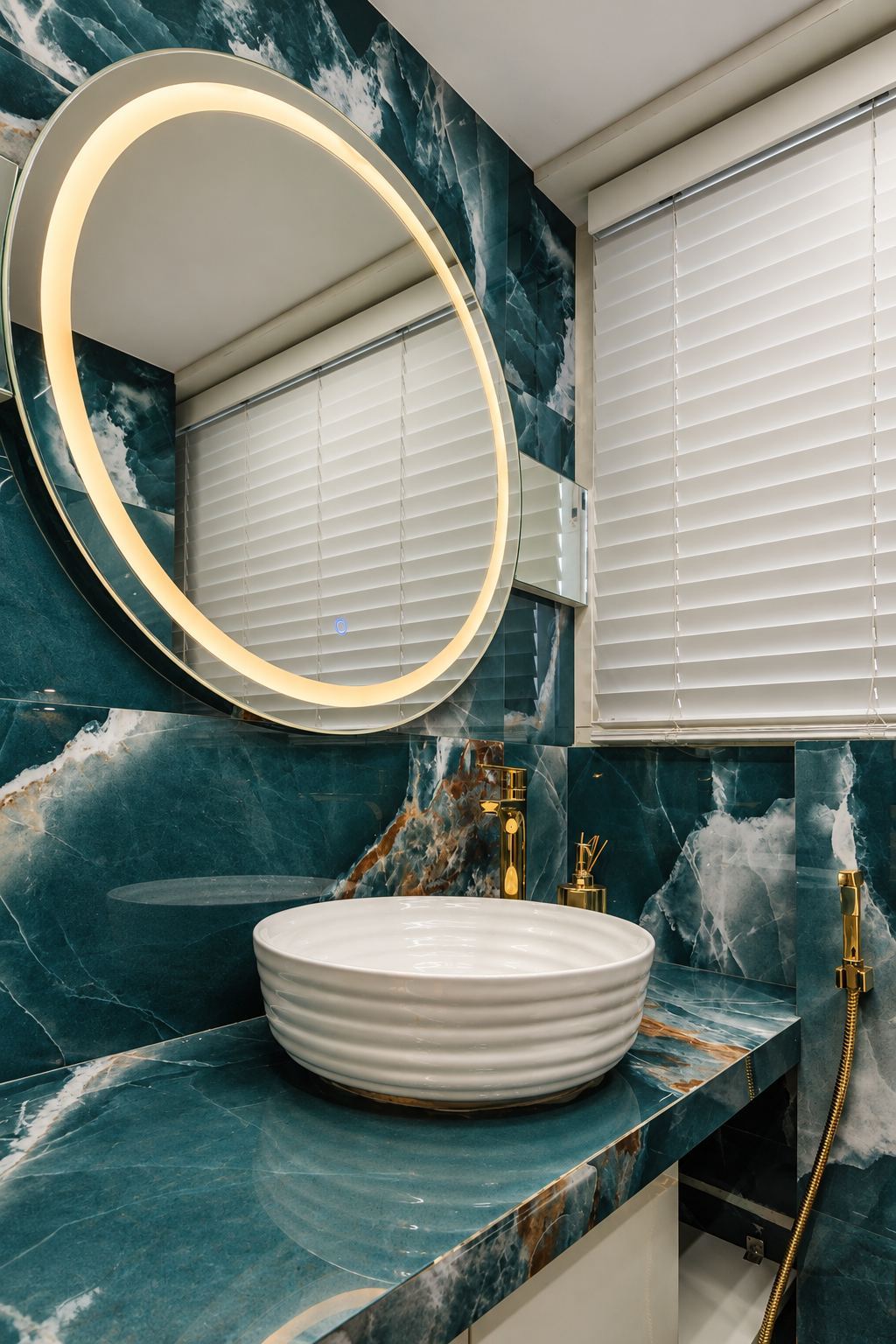
Hinges, drawer channels, handles and bathroom accessories corrode quickly in humid, salty air. In the kitchen and bathrooms, ask for good-quality stainless steel (SS 304) or properly finished brass. Cheaper plated hardware often looks the same on the day it is fitted and very different after one monsoon.
Paint, wallpaper, floors and fabric
- Paint. Washable, low-VOC paints with anti-fungal properties for interior walls, especially in kitchens, bathrooms and bedrooms on external walls.
- Wallpaper. Beautiful on dry internal walls, as in the Dadar bedroom. Avoid it on walls that have ever shown damp.
- Floors. Tiles and stone handle humidity best. Wooden flooring needs a moisture barrier and should not go near wet areas.
- Fabric. Choose upholstery that can be cleaned easily, and keep sofas a little away from external walls.
A monsoon routine
Good materials do most of the work. A few habits do the rest:
- Run the air conditioner on dry mode, or a dehumidifier, on the dampest days.
- Open wardrobes for a while every few days to let air through.
- Keep silica gel or moisture absorbers in wardrobes and drawers.
- Wipe kitchen shutters and counters dry at the end of the day.
- After the first heavy rain, check ceilings, window corners and the backs of wardrobes for any sign of leaks.
- Call your interior team early if a shutter starts to swell. Small fixes are easy; late ones are not.
Your next chapter starts here
Materials chosen for Mumbai.
Ask for every board, laminate and fitting to be listed with its grade, so you know exactly what is going into your home.